
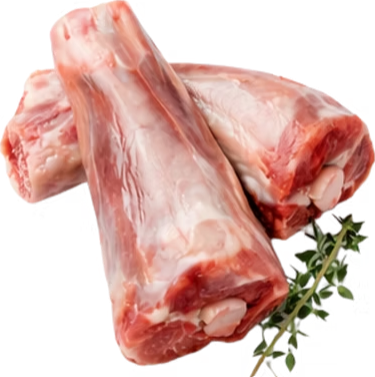
With the Iowa State Fair drawing close, I’m reminded of the first time I judged the Iowa Farm Bureau Cookout Contest. That year I judged the lamb category, and one competitor’s lamb shank stood out for how tender and flavorful it was. It was a great example of what this hardworking cut can become with the right cooking method — and it’s one of the reasons I enjoy offering lamb shanks here at Old Station Craft Meats.
Fore Shank vs. Hind Shank
There are two types of lamb shanks: the fore shank and the hind shank.
We carry the fore shank in the shop. It has a single solid bone, which makes it easier to cook, serve, and disassemble after cooking. The hind shank contains two bones — the tibia and fibula — and while still delicious, it’s a bit more involved to handle.
Both shanks consist of muscles that work all day supporting the animal and also have lots of connective tissue. That’s exactly why lamb shanks shine when cooked low and slow.
Why Lamb Shanks Need Time
Shanks aren’t suited for quick grilling or high‑heat roasting. They reward patience.
A long, slow cook — typically a wet cook like braising — allows the connective tissues to break down, releasing silky collagen and letting the meat fall away from the bone. The bone itself helps retain moisture and adds marrow richness that deepens the flavor.
Our Lamb: Sourced With Intention
While Iowa produces excellent lamb, we source ours from Anderson Ranches in Oregon (oregon-lamb.com), a fifth‑generation family farm raising grass‑fed lamb right here in the U.S.
We chose Anderson Ranches because they give us the flexibility to order the specific cuts we need, when we need them, and because their forage and farming practices produce lamb with a milder, cleaner flavor. This contrasts with lamb some customers have purchased from big‑box stores or grocery chains, which they’ve described as tasting gamey.
The science behind the flavor
Gamey flavor comes from compounds stored in the animal’s fat called branched‑chain fatty acids. The more of these compounds present, the stronger the “lamb flavor.” A mild lamb flavor is great — it’s what makes lamb taste like lamb — but when those compounds build up, the flavor becomes gamey.
Factors such as diet, growth rate, and stress all influence how these fatty acids develop. Lamb raised on lush forage, handled gently, and kept close to home tends to have lower concentrations of these compounds.
That’s exactly why Anderson Ranches’ lamb tastes the way it does. Their animals are raised well, managed carefully, and fed high‑quality forage. Because of that, the flavor is rich, clean, and almost slightly sweet.
Pick Up Lamb Shanks at Old Station Craft Meats
If the fair has you thinking about lamb — or if you’ve never cooked lamb shanks before — stop in and we’ll help you get started. The fore shank is a forgiving cut, and with a little time, it becomes something truly memorable.