
By now, most people probably know someone who has been affected by Alpha-Gal Syndrome (AGS). Unfortunately, I know several. Over the years, I've had conversations with customers who developed this allergy and listened as they described how much they miss being able to enjoy a steak, hamburger, brisket, or pork chop. As a butcher, it's hard to imagine.
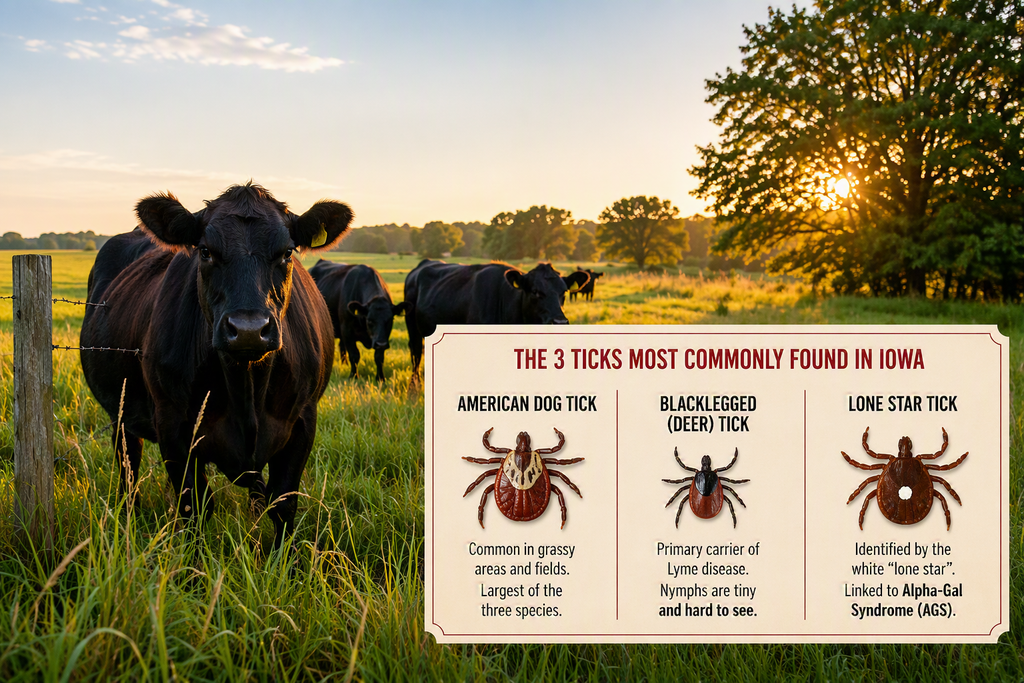
Alpha-Gal Syndrome is most commonly associated with the lone star tick, although other tick species have also been linked to the condition. The lone star tick has traditionally been more common in the southern United States, but it has become increasingly common in Iowa and other Midwestern states in recent years.
So what exactly is Alpha-Gal Syndrome?
According to information compiled by the Beef Checkoff, alpha-gal is a sugar molecule found in most mammals, including cattle and pigs, but not in people. Alpha-gal can also be found in the saliva of certain ticks. When one of these ticks bites a person, it can transfer alpha-gal into the bloodstream. In some individuals, the immune system responds by producing antibodies against the alpha-gal molecule. Those antibodies can then trigger an allergic reaction the next time that person consumes red meat or other products containing alpha-gal.
For many people, the result is a life-changing allergy to beef, pork, lamb, venison, and other mammalian products. Symptoms can range from mild reactions to severe allergic responses requiring medical attention.
As you can imagine, as a butcher and a lover of beef, developing Alpha-Gal Syndrome would be a nightmare scenario. Not only would I miss enjoying some of my favorite foods, but I'd also lose part of what makes this industry so enjoyable for me.
The good news is that there are practical steps you can take to reduce your risk of tick bites. Public health experts recommend:
- Know where ticks are commonly found. Ticks thrive in grassy areas, brush, timber, and wooded habitat.
- Treat clothing and outdoor gear with products containing 0.5% permethrin.
- Use EPA-registered insect repellents when spending time outdoors.
- Avoid walking through areas where ticks are likely to be present whenever possible.
- Perform thorough tick checks after spending time outdoors.
One thing I've found helpful is learning how to identify different tick species. The three ticks most frequently encountered in Iowa are the American dog tick, the blacklegged (deer) tick, and the lone star tick. Knowing which tick you're dealing with can sometimes provide a little peace of mind and help you better understand the associated risks.
Tick season in Iowa typically runs from spring through fall, with activity peaking during the warmer months. That means now is the time to be vigilant.
Please take a few extra precautions when you're enjoying the outdoors this year. We'd hate to see anyone miss out on enjoying a good steak, burger, or rack of ribs because of a tick bite.
If you are someone who unfortunately has AGS and are sick of eating chicken and are not a big lover of seafood, I'd recommend trying duck breast.
According to the CDC, poultry such as duck, chicken, turkey, and quail do not contain alpha-gal. Duck breast is especially unique because, unlike chicken, it is a darker, richer meat with a flavor and texture more similar to red meat. It's typically served medium-rare, making it a great change of pace for someone looking to add variety to their menu while avoiding mammalian meats.
If you've never tried duck breast, it might be worth adding to your next meal plan. It won't replace a great steak, but for many people living with Alpha-Gal Syndrome, it can be a welcome alternative.
Stay safe, check for ticks, and keep enjoying great beef. After all, life is just a little better when red meat is still on the menu.