
Cut of The Week: Bavette
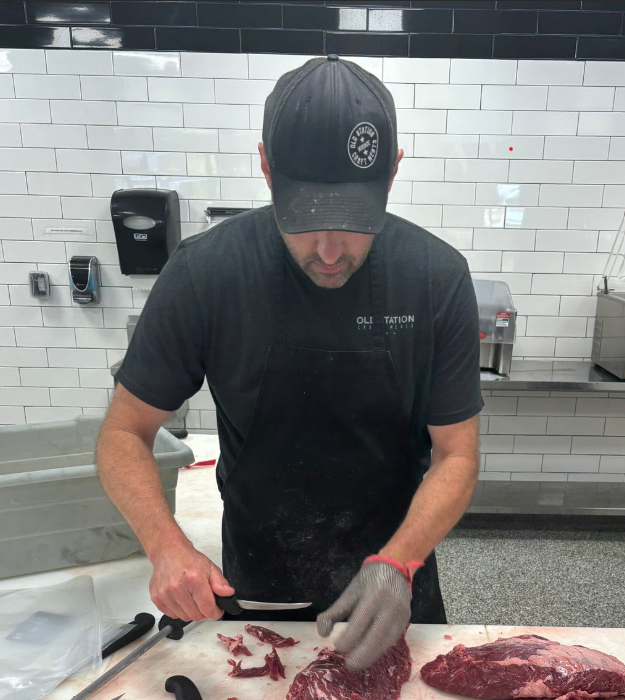
Brian is cleaning the excess fat from the bavette and portioning them into individual steaks.
This week we’re shining a spotlight on a cut that many customers haven’t had the chance to try yet — the bottom sirloin flap, more commonly known as the flap steak or flap meat. In France, it goes by bavette, and occasionally faux‑onglet, which translates to “false hanger.” That name alone probably perked up a few ears, especially among those of you who love our hanger steaks.
At Old Station Craft Meats, we call this cut the bavette, a tradition that started years ago through our relationship with the Des Moines restaurant Django. We supplied their bavette steaks for quite some time, and during that period we also carried the cut in our shop. When Django eventually stopped ordering it, we discontinued it as well.
But now it’s back, and we’re excited to reintroduce it.
What Makes the Bavette Unique
Like the hanger steak, the bavette has coarser muscle fibers and a loose, open grain. It’s sometimes mistaken for inside skirt or even flank, but it’s very much its own thing. Compared to flank, the bavette has a touch more chew — but it also has better flavor and a more satisfying texture. And it is better than the inside skirt (not to be confused with the outside skirt, which is the better of the two skirts) on all aspects.
This is a steak with character. If you go into it expecting a bit more chew, you’ll appreciate what it brings to the table: deep beef flavor, a tender bite when sliced properly, and a texture that holds up beautifully to marinades.
How We Like to Cook It
I personally really enjoy the bavette. When we were supplying Django, it was a regular in my own kitchen. It’s incredibly easy to cook — grill it, broil it, sear it in a cast iron, and yes, even toss it in the air fryer. On bitter winter nights, our family often threw a bavette under the broiler for a quick weeknight dinner.
Because of its grain structure, the bavette is best served on the rarer side. Medium‑rare is ideal. It's probably not the cut for someone who prefers medium‑well or well‑done steak — it will lose its tenderness if overcooked.
Why We’re Bringing It Back
The bavette deserves more attention. It’s flavorful, versatile, and easy to prepare — and once customers try it, they tend to come back for more. With a little education and a bit of curiosity from our community, we think this cut can earn a permanent place in your grilling rotation.
If you’ve never had bavette before, we hope you’ll give it a try and let us know what you think. It’s one of those steaks that surprises people — in the best way.