
Cured vs. Uncured: The Truth Behind The Label
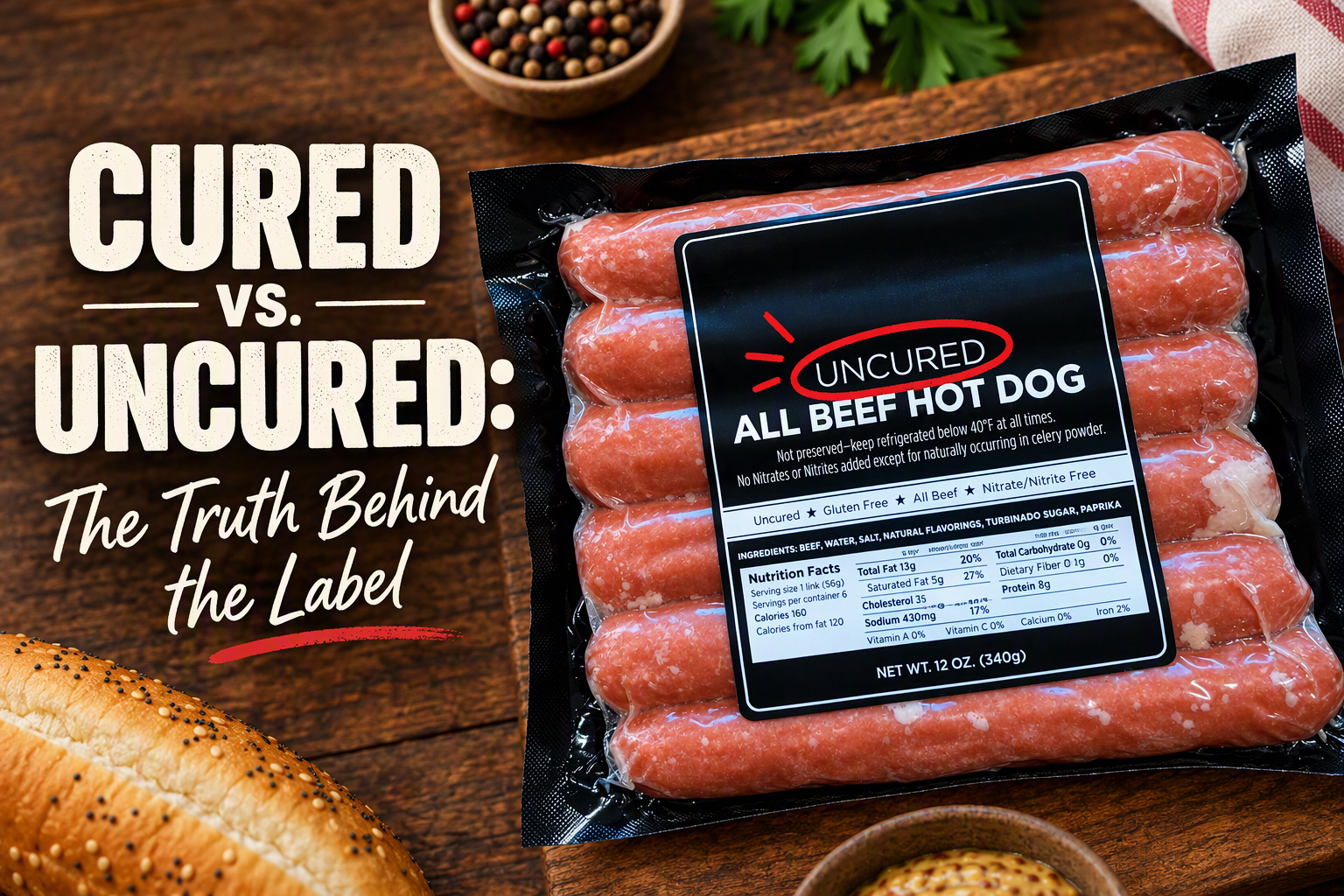
Few topics create more confusion in the meat case than the words cured and uncured.
Many customers specifically ask for "uncured" bacon or ham because they believe it doesn't contain nitrites or nitrates. Others are surprised to learn that some products labeled as uncured are, in fact, cured.
So what's really going on?
Let's start with a little history.
Humans Have Been Curing Meat for Thousands of Years
According to the American Meat Science Association, people have been curing meat since around 4000 BC.
Long before refrigeration existed, curing was one of the primary ways to preserve meat and extend its shelf life. Over time, people also discovered that curing improves flavor, texture, and color. That's why cured products like bacon, ham, sausage, corned beef, and jerky have remained popular for thousands of years.
Today, curing is still used for preservation, but it's also an important part of creating many of the flavors we associate with traditional meat products.
Where the Health Concerns Come From
In recent years, consumers have become more aware of studies linking processed meats to increased health risks, including certain types of cancer.
According to Dr. Anthony DiMarino, RD, LD, nitrites and nitrates used during the curing process can react with naturally occurring amino acids and form compounds called nitrosamines during cooking. These nitrosamines are believed to be one of the factors contributing to the increased cancer risk associated with processed meats.
As consumers learned more about these concerns, food manufacturers began searching for alternatives to traditional curing ingredients.
The Rise of "Uncured" Meats
To meet consumer demand, some manufacturers started curing meats using naturally occurring nitrates from sources such as celery powder rather than using synthetic sodium nitrite.
Here's where the confusion begins.
Products cured with celery powder are often labeled as "uncured."
That seems strange because they are, in fact, cured.
The reason is regulatory rather than scientific. USDA labeling rules only allow products cured with approved curing agents such as sodium nitrite to be labeled as "cured." Products cured with naturally occurring nitrate sources like celery powder must instead carry labeling that identifies them as "uncured" even though they undergo a curing process.
As a result, many consumers understandably assume that "uncured" means no nitrites or nitrates were used.
In reality, those compounds are still present. They simply originated from a natural source rather than a synthetic one.
Is Naturally Cured Meat Healthier?
This is the question most people really want answered.
According to Dr. DiMarino, nitrites and nitrates derived from natural sources are still capable of forming nitrosamines.
While consumers may prefer naturally sourced ingredients for various reasons, current evidence suggests that simply changing the source of the curing agent does not eliminate the concern surrounding nitrosamine formation.
There is another interesting factor to consider: how the meat is cooked.
Your Cooking Method Matters
Dr. DiMarino explains that nitrosamines are more likely to form when cured meats are cooked at very high temperatures.
That's probably bad news for those who enjoy bacon that's cooked until it's nearly black and shatters like a potato chip.
Personally, I've always been a fan of bendy bacon rather than burnt bacon. Not only do I think it tastes better, but it turns out to be the healthier option as well.
Dr. DiMarino also notes that consuming foods rich in vitamin C alongside cured meats may help inhibit the formation of some of these compounds. A glass of orange juice with breakfast or colorful fruits and vegetables on the plate might do more than just add color to your meal.
Why "Uncured" Often Costs More
One thing many consumers don't realize is that naturally sourced curing ingredients can be significantly more expensive.
In our own experience, celery-based curing ingredients cost dramatically more than traditional sodium nitrite (over 800% more!).
That additional cost is often reflected in the price of the finished product, even though the end result is still a cured meat product.
The Bottom Line
The terms cured and uncured are often more about labeling regulations than meaningful differences in the finished product.
Both products are cured. Both contain nitrites or nitrates. Both can form nitrosamines under certain cooking conditions.
Rather than focusing solely on whether a product is labeled cured or uncured, it's more helpful to think about overall dietary habits.
Humans have been enjoying cured meats for thousands of years, and they're likely to remain part of our diets for thousands more. Like many foods, moderation is key.
Enjoy cured meats as part of a balanced diet. Avoid excessive charring during cooking. Pair them with plenty of fruits and vegetables. And most importantly, understand what the labels actually mean.
Sometimes the healthiest choice isn't eliminating a food entirely. It's simply making informed decisions about how we prepare and enjoy it.
Sources:
- health.clevelandclinic.org, "Is Uncured Bacon Healthier or Just Hype?
- American Meat Science Association, "Sodium Nitrite in Processed Meat and Poultry Meat: A Review of Curing and Examining the Risk/Benefit of It's Use"